An intimate history of the love and loss and rediscovery of sleep
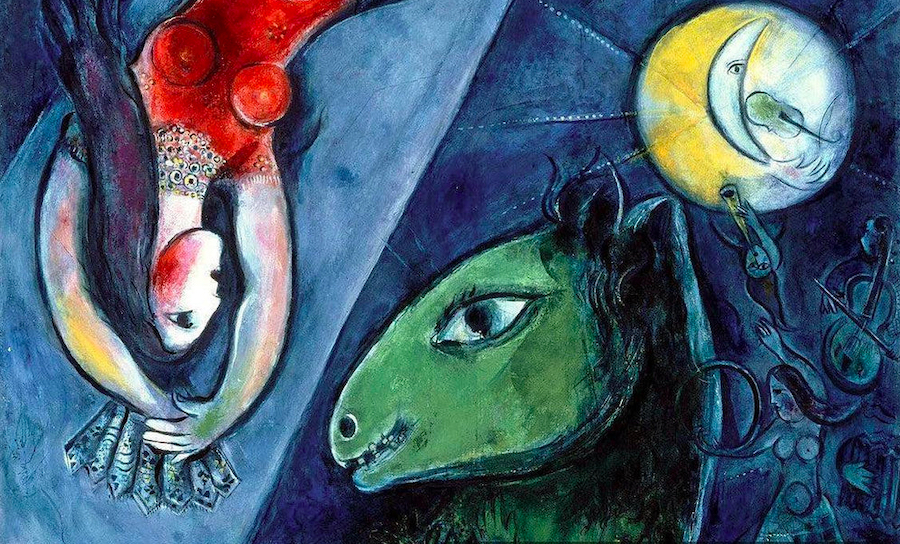
From the age of about three, sleep presented me with many gifts: escape, first and foremost, from pain, from unnamed, confused grief, escape from loneliness, escape from reality…
Another gift was the exploration of the otherworlds: dreams, lucid and near-lucid, dreams that felt as if I were slipping between dimensions and realities, both light and dark, dreams that took me to people who were on the brink of death to speak to them before they passed; dreams of flying and houses and fantastical dreamscapes that I would explore over many months and years from different angles…
Sleeping and dreams brought me to Jung, to alchemy, to psychics and the esoteric, to the belief that the unseen is as real as the seen.
But it brought me there not only because of the gifts, but because of what came with the gifts: shattering horror.
Little fairies proele mah hairie
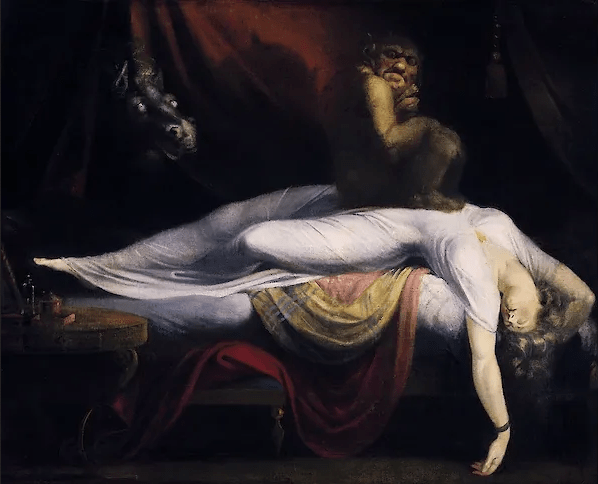
Nightmares, sleep paralyses, hypnogogic hallucinations; the buzzing, choral, musical roar or static or reverberating gong that left me feeling like my brain was plugged into some ecstatic, electric, ethereal radio station; felt sensations that convinced me angry, desperate spirits were real, sensations that explained the origin of the incubus.
Sleep didn’t just come to me at night like a lover, slipping in unseen and quietly. It came to me everywhere.
Clubs, restaurants, mid-conversation, school, work, driving, in the third row at a performance of STOMP … If I was sitting, sleep wasn’t very far away.
Years later, a social worker who had a special interest in managing support groups for narcoleptics would name this condition for me, something I hadn’t done because I always had a few seconds of notification from my system that the sleep would be on me soon. I didn’t fall down like the people in the movies.
Usually the episodes would be quick: I’d feel it come on, I’d close my eyes, drop immediately into REM, have whole dream sequences, wake up two minutes later, my brain back online.

Sometimes the episodes were longer simply because my sleep had been so disturbed the night before.
I don’t know how I passed school or college or held down jobs. I don’t know how I didn’t kill myself one particular night when I blanked out somewhere before Tygerberg Hill and came to in a ditch in Oakdale—about an eight or nine kilometre drive on the highway with off-ramps and traffic lights.
I have an idea though.
You see, my brain started doing this thing where it would split. Part of it would go to sleep while another part of it, the part motivated by shame I imagine (I became deeply embarrassed and eventually ashamed of the sleep attacks) and social expectation, would keep going.
Mostly this looked like keeping writing or keeping talking. ‘Crazy talking’ the people who are closest to me call it.
We’d be having a conversation and the sleep would come and my brain would split, one part of it deep asleep, the other hearing the words and trying to engage with them. But the interpreting was happening in the dreamworld and my verbal centre would answer from this space. One minute I’m there talking to you normally about Gwyn’s new car, the next I’m confirming that yes, I do feel bananas are a good introduction to a table salt for turtles.
Crazy talking.
It happened with writing as well. Many years ago when I was still working as a coder and designer, I fell asleep at my desk for a few minutes and when I came to I’d typed ‘little fairies proele mah hairie’. It was the most delightful of all the shit I’d written so I’ve never forgotten it.
Little fairies proele mah hairie. They sure fucking do. Or, at least, did.
Over the years, things started shifting. The dreams were still wild, the nightmares still vivid; I could still sleep anywhere and everywhere if I wanted to, the crazy talking still happened. But the sleep attacks got rarer until they almost disappeared, and the buzzing and the sleep paralyses and the hypnogogic hallucinations less. I put it down to therapy and changing hormones and a happier life.
Then perimenopause hit.
Into the wild…
I know my experience with perimenopause is not everyone’s experience. I know some women breeze through it with a little hot flash here and there and then they’re cool. That’s not my experience. I felt—am feeling, I guess—every bit of the total brain rewire that it is, hitting every branch on the menopause tree on the way down, as it were.
And it announced itself with changes in my sleep. About five or six years ago, when I—unknowingly and slowly—entered perimenopause, my usually perfect sleep (close my eyes, wake up seven hours later) started evaporating.
My thermoregulation was in the shitter, I kept waking up. And then, on my 46th birthday, I fell asleep at 9:30 pm (I had a workshop to attend the next day), woke up at 12 and didn’t sleep again that night.
If I say it was a shock to my entire system—physical, spiritual, mental, emotional—I’m not exaggerating. That had literally never happened to me in my entire very sleepy life.
From that moment on, my sleep deteriorated. I didn’t know it was perimenopause and, even when I did, I didn’t take HRT because ‘it’s bad’ and I was going to ‘age naturally’ etcetera. I eventually cracked when my average daily sleep came to less than two hours and I momentarily lost the ability to form a word with my mouth muscles. I got the fuck on HRT.
Things got way, way better.
But perimenopause is not a linear experience, especially if you’re getting it in the face with the consequences. HRT will work and then your hormone levels shift again and everything is kicked out of whack and you have to re-figure out what works.
So about six months ago there was another shift and my sleeping changed again and not for the better.
…and then into the madness
And I did everything wrong. I started clock-watching, I medi-doomscrolled at all hours of the night and morning to figure out what was happening, I stayed up later and later to avoid going to sleep, I looked at my phone and soaked in all the shitty news in the wee hours of the morning, I started fucking with my HRT dose to see if that was it, I started controlling my diet in a desperate attempt to make things better, I started self-talk that wasn’t helpful, I finished a book and starting looking for an agent…
At that point, I was getting maybe five pretty broken hours a night.
Boy, what a good time that was. Pity I didn’t realise it, because it just got steadily worse.
About two months ago, my sleep demon acquired a buddy: anxiety. And not your run-of-the-mill, low-level GAD. No, it went for the relentless night-time anxiety that ratcheted up to pure, heart thumping, tearing panic when I woke up from my initial hour to three hours.
What woke me initially were not my thoughts, let me be clear.
Some stressful stuff’s been going on, but it’s not like I was lying in bed thinking about any of this. My mind wasn’t ‘racing with thoughts’. GABA dealt with that. Besides, I was an expert sleeper who had trained my whole life to sleep as an escape from the sads, the greys, the stress, the horrors. Stress wasn’t it.
No, I would just wake up, enjoy a few moments of peace, and then my breathing would get jagged, my amygdala would scream ‘Fire!’, my adrenals and cortisol would go berserk, and my body would just run with this for the next five hours.
If I managed to doze off again, a silent siren would go off in my body and frighten me awake, as if I were a PTSD victim in a state of hyper-arousal, my subconscious convinced that I was in a war and that sleep would weaken my defenses.
No amount of breathing, no meditations, no CBD dummies (turns out it was never the CBD in dope that put me to sleep, it was the THC), no Valerian touched sides. Sleep hygiene didn’t make an ounce of difference. Melatonin was a joke. Fuck magnesium and l-theanine and GABA. Not enough. Tapping? Ha ha! Exercise? Please. Sex? Nope. I tried a CBT app, but wasn’t sleeping enough to make it viable. Tried a sleeping pill and it bounced right off the adrenaline.
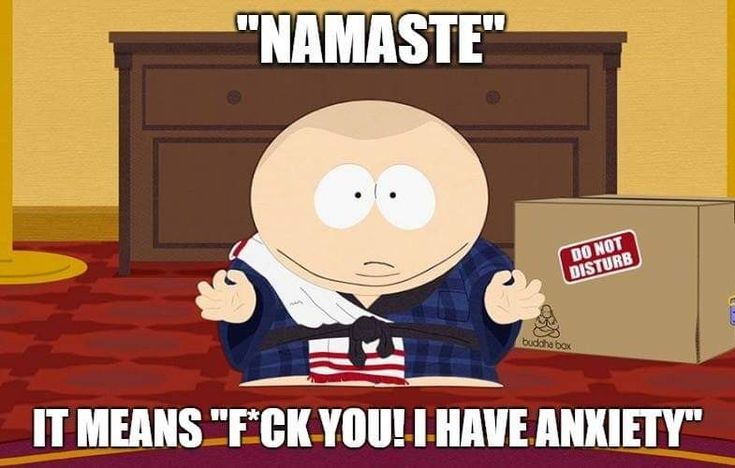
I had blood works done. Everything came back normal. Cortisol? Amazing. Sugar? 100%. Vit D? Excellent! Blood pressure? Best in years!
I was a zombie most days.
Eventually my brain—the one so used to sleep shenanigans—decided to mix shit up a bit and try a variation on the theme of sleep horrors: Splitting and sleep paralysis but for insomniacs.
Now, when I snatched those rare moments of dozing from the anxiety and my body started slipping into a deep sleep, the part of my brain that remained awake during crazy talk now sat by like an opinionated aunt having her moment.
‘Oh look at that,’ she’d say, as I, the me, the third, desperate, disembodied bystander, would watch helplessly, hearing my breathing change, feeling my body slip peacefully into oblivion. ‘Can you hear your deep and wonderful breathing? Can you feel your body relax? You’re really, finally, falling into a deep sleep now aren’t you? Isn’t that interesting?…’
And then I’d be pulled to the surface under the scrutiny, and the whole cycle would start again in soup of anxiety.
Of course, then the really bad thoughts would start: This is the start of dementia! Schizophrenia! I have a brain tumor! My pineal gland has calcified! My brain is broken!
I’m only telling you the half of it.
I turned into a medieval peasant trying every little superstitious tweak eventually to sleep: Lavender on your heels before night! Stare at the morning sun for your circadian rhythm! Wear no metals on your body! Dance in the light of the pale full moon! Sleep facing north!
Nothing.
By this stage I was getting a broken three hours a night. Maybe an hour and a half when I went to sleep, then five panicked hours awake, then another half hour and another. Because if it wasn’t anxiety keeping me awake, it was like full-body restless leg syndrome or the muscle twitching that happens when your neurotransmitters are firing all rounds of ammo in store.

It was so much fun, internet friends. So. Much. Fun.
So I decided it was time for intervention. First a sleep clinic and then maybe a shrink and some anti-anxiety meds.
I went to the sleep clinic first. I slept for two and a half hours that night between bouts of heart-racing panic and the itching, twitching of leg muscles almost the entire time.
And guess what? The labs came back normal!*
Things were not looking good. I should’ve been utterly disheartened. And yet I wasn’t. Because in the background, even though I couldn’t quite qualify how it all started clicking into place, things were happening to counter this.
Mister Sandman’s name is Tryptophan
The first thing I remember was a mindset shift, and I feel like it coincided with this quote I saw on the wonderful @JungSouthernAfrica insta page.
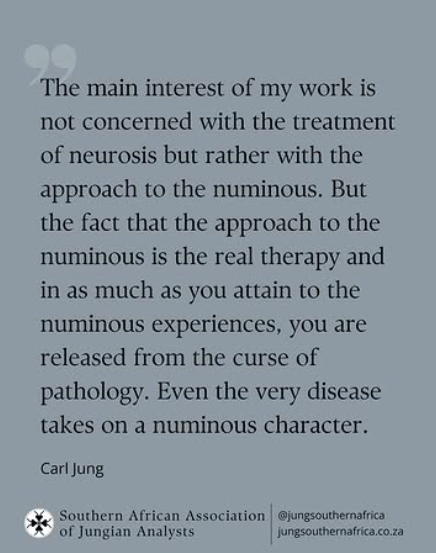
The numinous, he believed, was the ultimate therapy, capable of transforming psychological suffering and even illness.
The numinous. The spiritual, the divine. The meaning we imbue our life with to make living bearable.
When confronted with a challenge or a wounding, does it become your identity or does it become one part of your divine path of spiritual awakening?
Answering this question with the choice always to move through, to move forward, has been how I’ve dealt with any challenge I’ve faced so far in my life. It might take me hours or days or weeks or months or years to come to choosing this perspective, but I invariably do.
The problem with sleep, I figured, was no different.
Science told me ‘sleep paralysis’ and ‘hypnogogic hallucinations’, words I only came to much, much later in life. Words that speak to a pathology and I’m not denying that.
But it couldn’t explain everything, and my experience of it as a child and young adult wasn’t physiological in my mind, but spiritual. A divine intervention that directed my life towards an awareness of how the physical and supernatural intersect that would not else have happened.
When my sleep turned ‘bad’, and I tossed and turned in the dark and my thoughts twisted towards the mad with worrying about disease and broken brains, the only thing that pulled me out of identifying with the ‘disease’—Oh great, now I’m an insomniac.—was framing the experience as transcendent or at least the opportunity to put my faith in flow to the test.
If this was flow’s way, I decided, then so be it. Surrender. Listen. Get out of bed, make tea, do some yoga. Just let the wild anxiety roller-coaster ride through you. See where it goes.
At about this time, two things happened.
The first was that Tom suggested I take a look at my gut health (he’d read something about the link between gut health and sleeping), and the second was that a word had suddenly started popping up in my mind: tryptophan.
You see, my body intuition speaks pretty loudly and I can usually hear it when I’ve stopped freaking out about what I think is happening.
So I looked it up.
Tryptophan is the essential amino acid that acts as a precursor for the creation of serotonin—90% of which is made in your gut. And serotonin isn’t just there to make you happy, it’s there to regulate not only your body temperature, but, yup, you guessed it, your sleep. No serotonin = anxiety + no sleep.
And what makes tryptophan do its work so it can make serotonin? Estrogen.
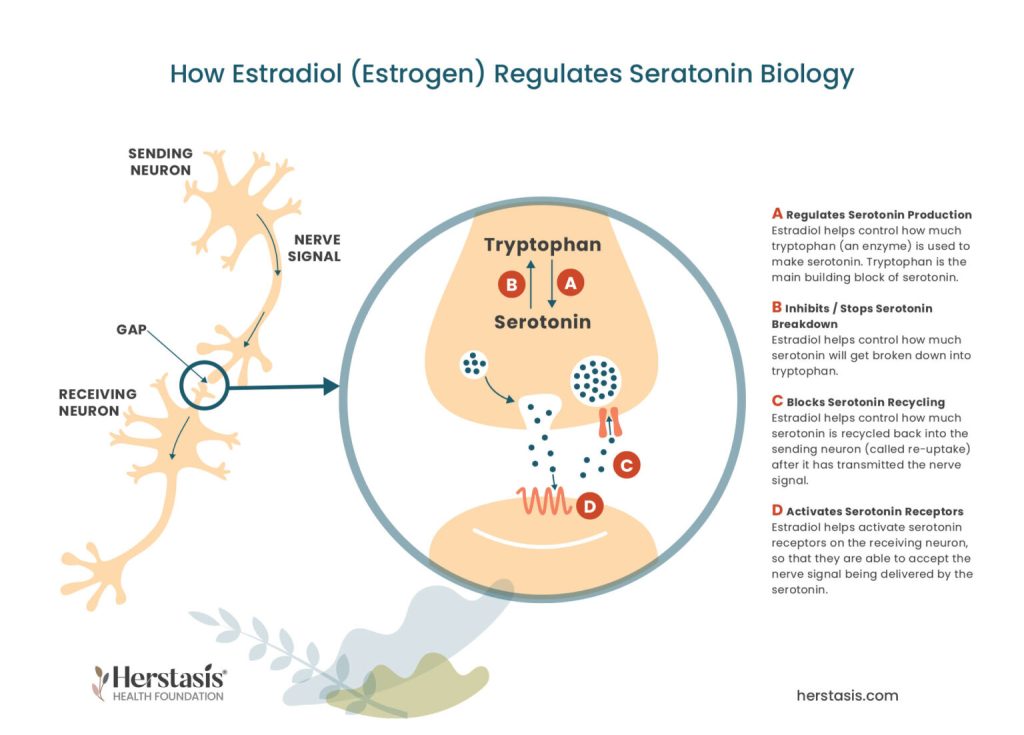
Even though I’m on HRT, it hasn’t been enough to cover the shift that happened a few months ago.
So I started including some tryptophan-rich foods, but ultimately decided to take 5-HTP—which is basically what tryptophan converts into to make serotonin—with all the probos to just kick-start the whole gut/serotonin thing.
In fact, I’d started taking the 5-HTP the day I called the sleep clinic—two days before for the appointment. For those two nights I slept better than I had in months, years even. The day of the test I took nothing and slept like shit again.
Since then, I’ve been taking my 5-HTP and eating my tryptophans and coaxing serotonin back into my system, and slowly, slowly sleep seems to be returning to me.
Some nights are better than others, some nights still need tea and candlelight and reading while my body works its way through the heart-flutter of gentle anxiety. But the panic-galloping, racing-dread near-manic hours upon hours of waking seems to be behind me.
I mean, I’m not counting my chickens and all that, but I’m hopeful.
My dreams are coming back and I’m looking forward to finding all my dreamscapes again, connecting to the holy choirs, finding the people who speak in the other spaces.
Of course, I’ve learned that one has to be particular about your wishes, so I’m looking forward to all of that without the near-narcolepsy or horror, please and thank you.
I’ll end this here, but for those women wanting to know more about what I’ve done to deal with anxiety, sleep and perimenopause, my little recipe is below. I’ve also included a list of links about things I’ve mentioned in this piece.
Over and out, you crazy beautiful weirdos.
Here’s to good sleep,
t

Some links
- The Hidden Link Between Menopause and Sleep Problems. A fantastically helpful article explaining this issue.
- Perimenopause, serotonin, and tryptophan. I’ve always heard ‘oh anxiety goes up with perimenopause’ (especially if you’ve dealt with depression before), but never understood why. This is why (among other things, I’m sure).
- CBT-i: What it is and how it works: This is actually a presentation about combining CBT-i (Cognitive Behavioural Therapy for insomnia) and medications for insomnia, but the beginning is a pretty awesome overview not just about the therapy, but the false thinking that blooms from insomnia.
- The CBT-i Coach app. It’s a free app that was developed for US veterans and while it’s not super intuitive (and I never got so far as using the coaching), it’s got amazing reviews and incredible resources.
- Irregular sleep patterns associated with harmful gut bacteria. A new study, a small study, but one worth considering.
Recipes for sleep and calmness
You still here? Okay, here’s what I’m doing. Some provisos: This is only working at this exact moment. Who knows what’s likely to change. And each body is different.
HRT changes lives.
Please stop thinking it’s bad news. The early 2000s study was flawed, your entire body needs estrogen to survive. The human body is living longer and outliving its endocrine system. Give it a little help.
- Read this very neat summary of the situation by Yale’s School of Medicine: After Decades of Misunderstanding, Menopause is Finally Having Its Moment.
- Here’s my story about perimenopause, From The Clitoris to Menopause, the Uncovering and Recovering of Pleasure, with links to more resources.
Supplements.
This is just what works for me and my problem seems to have been serotonin. In the morning: Ashwagandha and lions mane, probos live and in pill form, 5-HTP. At night: PrimeNite, calcium, iron, GABA, 5-HTP, Valerian. I’ll probably only stay on the probos and 5-HTP for as long as is necessary and then wean myself off. I take iron regularly and vit c most days, because mostly vegetarian and that combo is known to help with restless leg. And, of course, estrogen and progesterone.
Sadly, you just have to change your lifestyle.
I don’t smoke, I don’t do coffee, I stay away from inflammatory foods (alcohol, sugar, wheat), I drink a ton of water. All of this affects your sleep, there’s just no fucking way around it. Unless you’re extremely lucky, the shit you could eat and drink in ‘your youth’ your body will no longer be able to tolerate unless you want to live off pain killers and anti-inflammatories. Of course you should move and get strong and all that, but honestly, nothing has affected my body more than what I eat and drink (or what I put on it, in the case of estrogen).
This also includes sleep hygiene. Here’s a good article on that. Although, if you’ve got deeper underlying issues no amount of sleep hygiene is going to make a difference. It’s like, part of, not the whole thing.
Retrain your brain.
I learned from the sleep clinic that you can train your brain into bad sleep habits. For example, did you know you’re not actually supposed to wake up to go to the bathroom during the night? Assuming you haven’t had litres of liquids, you’re supposed to sleep through. So what happens is, you wake up one night to go to the bathroom and the next night you wake up and think well I’m awake I might as well go to the bathroom, and then suddenly your brain’s waking you up every other night because ‘Hey it’s bathroom time.’
Stop stressing about not getting enough sleep.
You’ve got enough to worry about. Sleep has become a competitive sport and it’s exhausting. And when you don’t get enough sleep, it can feel like you’re hurting yourself. I learned from CBT-i that you can’t break your brain no matter how distressing it can feel. I learned that you’re not going to suffer injury or induce some dread disease because of sleeplessness. I learned that you can train yourself back to sleep and that there are people who can help you. Google ‘sleep therapist’ or ‘neuropsychological therapist sleep’. These specialists will be different to the sleep clinics that simply run the tests and are not at all diagnostic. This and a psychiatrist for anti-anxiety meds would’ve been my next two stops.
Get tested at a sleep clinic, but know what it’s about.
I learned that all sleep clinics basically just test for apnea. Doesn’t matter what they say. Doesn’t matter how fancy they are. I learned that medical aid, even on a hospital plan, will pay for one apnea test because it’s such an influence on mortality. I learned that if you had lots of teeth pulled it affects your palate which can ‘collapse’ when you sleep. I learned that you can have silent apnea. I learned that you need a minimum number of apnea events in a sleep cycle to justify getting medical help. *I have apnea, you see, but not enough for intervention. Apparently it’s totally okay to stop breathing for almost a minute and a half. (That’s both sarcastic and genuinely amazed. Happy daze.)
🌠
 TANYA MEESON