I’m not sure when perseverance in the publishing game turns toxic, but I am sure that self-publishing is the panacea for it

If you’ve been with me for a while, you’ll know that I’ve had something of a love-hate relationship with self-publishing, but that that experience has also taught me that self- and hybrid-publishing might be the only way writers see their work in the public arena in future.
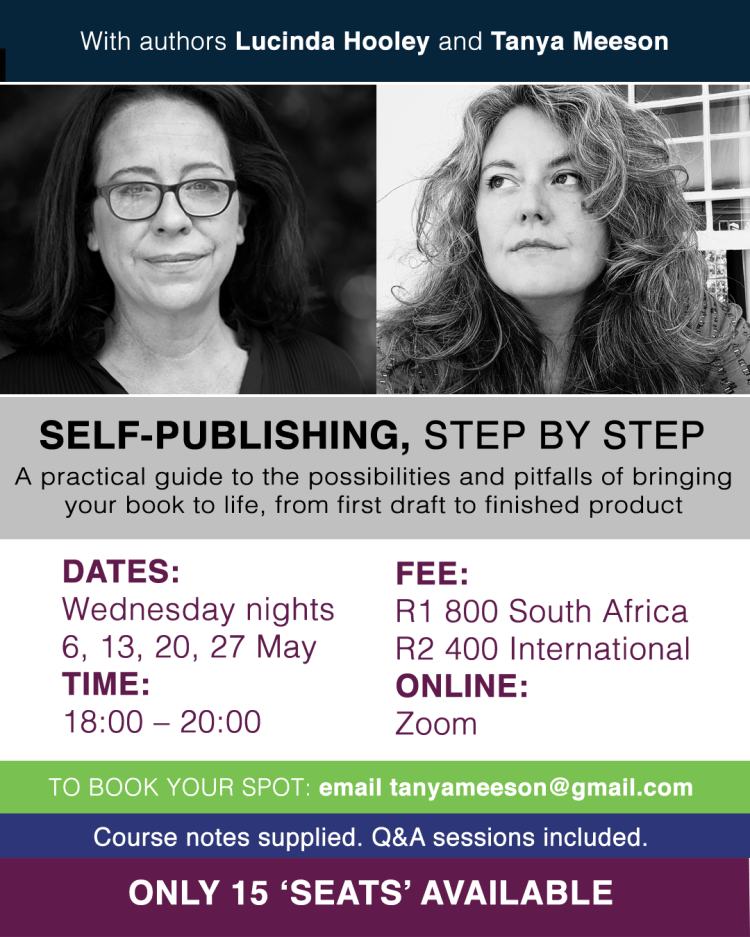
So I want to talk a bit about this today and let you know about a self-publishing course that I’m running with Lucinda Hooley in May. The former might seem like it’s only there to punt the latter and in way it is I guess, but this is more a happy coincidence of timing than anything else.
It’s a pretty niche post and probably only of interest to a handful of you.
If you drop off now, I’ll see you in the next two weeks with a life and book update and a brain fart about humans in space. (Did you know that sperm can’t find the egg if you have sex for procreation in zero or even simulated gravity? Now you know.)
Okay, you still here?
Excellent.
Well, as you may know, I’ve tried, to varying degrees, to get each of my books traditionally published, and eventually ‘settled’ each time on self-publishing.
With the The Fulcrum I submitted close to eighty agents; with Neko I researched and balked at the extremely narrow and long-range submissions windows on the only two publishers I could find accepting unsolicited, any-topic sci-fi novellas; with The Witch of Benbar’s Cross I submitted to just a spit over twenty agents and one local publisher.
To say that my experience with pitching The Fulcrum was an exercise in existential crisis and disillusionment is an understatement. Self-publishing was the only way to heal that wound and find some sort of empowerment, and now, with the publication of The Witch of Benbar’s Cross, I’m feeling even more sure about this avenue for myself.
Still. After deciding to self-publish, have I thought with each one of my books: ‘shit, I should’ve waited; I should’ve tried pitching more’?
Sure.
But then I always come to the same thought: tried pitching more for what?

Get in the ring
When writers start pitching, they get told some variation of ‘if you’re not getting requests to read the whole manuscript, if you’re not getting anything but silence and form rejections, you need to reassess your manuscript or who you’re pitching to’.
The idea is that there’s probably something wrong with your story or writing or ‘voice’, or you’re pitching to the wrong agents.
If you’re very sure you’re pitching the right people, and you’re still not getting any feedback or requests for the full manuscript, you’ve got to ask yourself: am I getting it wrong?
Should I be changing the story, rewriting, cutting words? What can I do/change/write to appeal to the unknowable heart of stranger?
And then writers are encouraged to ‘just keep going’, keep persevering; pitch ten, twenty, fifty, seventy, a hundred, two hundred agents! It’s a numbers game, guys! Just keep going! Someone, somewhere will finally see your brilliance!
Or, you know, just write something agents want to sell. And then write and write and write until you get noticed.
It’s the ultimate ‘pick me’ game.
But something’s happened for me lately, here in this realm of ‘perseverance speak’ in the publishing industry, something that I find somewhat surprising for myself since I’m usually all about the grit.
I’ve started thinking it’s all bullshit.
I’ve started seeing, on Substack especially, this near-pathological reverence for perseverance in finding an agent or publisher that borders on the masochistic.

An aside…
Now, before I continue, let me just say what you’re probably going to be thinking at some point as you read this …
- You’re just jealous. Yes. To some degree. If I’d got a traditional publisher, I wouldn’t be sitting here espousing the value of self-publishing. But here I am now, forced by my impatience and self-respect to consider the meaning in all this.
- Stop shitting on other people’s path. I promise I’m not. It’s a genuine reflection that should be titled: what and who the fuck are we writing for anyway? But people’s mail services don’t like naughty words in the subject line.
So, with that out the way, here is an example of something I’ve been seeing a lot:
Just keep swimming
Hey guys! I pitched my first book in 2004, no luck, so wrote book 2 and 3 and found an agent in 2007, and yay! my book went out on submission but no one picked it up so sad :(, my agent ghosted me, I was so depressed I nearly killed myself. then I wrote book 4 and 5 and 6 and found another agent in 2014 and that book went out on submission and after multiple edits still didn’t find a publisher, 😦 😦 I wanted to die and felt like my life was over and it took me years to recover, but my new agent believed in me and so I worked on another 5 books until the 11th one got selected and now, I’m so delighted to say, I’VE MADE IT and I’m finally getting published! It only took 22 years but dreams really do come true. Just keep going guys! Believe in yourself!
And everyone’s like ‘OMG! What an inspiration!’
Wut?
Unless self-flagellation is your thing, there’s nothing inspiring about that at all. It sounds exhausting. It sounds brutal. It sounds painful to the point of self-harm.
Because what the actual fuck?
You could’ve self-published and had ten books under your belt before the eleventh one got trad published, and yeah, maybe they would’ve been crap, but you would be learning. You would be growing. You would be finding your readership.
I mean, I’m not really even exaggerating. The one I read last night struggled EIGHTEEN YEARS to get noticed by an agent.
And then I have to wonder to myself, after all that time, waitin’ and hopin’ and prayin’, are you writing for yourself and your gods, or are you writing what you hope will matter to an agent?
Are you honouring your creative expression or are you slowly chipping away at it so that an agent or publisher (in South Africa, we don’t need agents) might like your stuff enough so that they might throw you a golden ticket to the gladiatorial arena that is modern publishing?
I don’t know. I don’t know these people obviously.
But I do know that if I was going to make ‘getting traditionally published’ my aim, I’d have to change quite a lot about myself and my writing.
Who is all this persevering for, really?
I get asked often—especially when I’m bitching about The Trouble With Finding An Agent Slash Publisher—why I don’t ‘just write romance’ or, you know, some other infinitely sellable commodity right now, like ‘weird girl fiction’ or serialised ‘elf porn’ or ‘trauma-as-entertainment’, and apart from the glaringly obvious—it’s just not by bag o’ beans daddy-o—I just don’t want to spend all my energy and precious time changing my natural storytelling vibe trying to get that golden ticket, only to … not.
I mean, there’s no guarantees right? I could write the next romantasy-meets-gay-boy-hockey-spicedrama-meets-Bridgerton and by the time I’m ready to push ‘send’ on that flaming heap of manuscript the trend has moved back to vampires and werewolves.
If I did that, I wouldn’t be writing for me, I’d be writing to get chosen. And is that what I want for my life? To keep myself chained to some story of significance that might be granted to me by that one agent, that one publisher?
Would that make me a real author?
Look, this isn’t every writer’s issue.
Those who find themselves easily plucked by trad publishing don’t have to think about these things. Their writing style and storytelling framework is already humming along nicely to the zeitgeist’s wavelength. As long as they keep doing the same thing over and over again they’ll be fine.
But what if your work isn’t considered ‘sellable’ by some human or AI agent? What if you don’t get chosen?
I think, then, you come, as I have, to one question as a writer: what is writing to me?
Am I writing because it’s a deeply personal creative exploration or am I writing to create a product that will get picked up by an agent?
The two aren’t mutually exclusive, of course, and the one isn’t inherently better than the other.
But what if you can’t align the two, but want the latter? What will you be willing to change about yourself and your writing to improve your chances of being the chosen one?
And if you can’t align the two, are you willing to strike out on your own?

You can go your own way
So this is how I got to self-publishing. I’m more interested in pursuing the stories that come to me and how they come to me, than pursuing how to better shape them for traditional publication.
That’s the choice I had: The pain of persevering or the pain of self-publishing.
So I gambled on self-publishing.
And I was willing to do so because the pain of changing what comes naturally to me for trying to be chosen (and possibly still not being considered good or relevant enough) was more than the discomfort of self-publishing.
Some people don’t see all that perseverance as toxic or wasted opportunity; some people don’t have a problem with relentless rejection. I am not one of those people.
As for authors who don’t need to think about this at all?
I envy those who slip into the zeitgeist easily and are celebrated for it. But I also know this is not something that can be orchestrated. You’re either that person or you’re not.
And you won’t know where you stand until you try publishing your work.
BUT—and this is a big but, one that I think changes things somewhat—that slipstream into the zeitgeist, and who gets chosen to ride it, is no longer just about how good your work is.
It’s about what’s likely to sell to the greatest number of people or win an award.
Sometimes it’s not you, it really is them
The gatekeepers, who used to be arbiters of ‘good literature’, are now beholden almost entirely to what the accounting algorithms say the largest majority of people will be willing pay for or applaud.
Moreover, what those gatekeepers (the publisher or editor your agent will sell your work to) don’t have anymore is the runway to publish as broadly as they might’ve done in the past.
You might not be getting a yes, not because there’s something wrong with your work, but because publishers only have so many books they can publish a year and can’t afford to take risks.
This is especially true for South Africa, where you don’t need an agent to get a publisher, but where that runway is shorter than ever before.
A month or so ago, author Jen Thorpe spoke to Andrea Nattrass of Pan Macmillan South Africa about the local publishing scene. I recommend you watch it (click the link), but what interested me most is what Nattrass had to say about just how many books Pan Mac SA is able to publish a year, and how fiction slots into that (it’s at about the 06:00 mark).
‘When things narrow down, where we’ve got thirty submissions [from three or four hundred] to choose from in a commercial fiction space,’ she says, ‘it becomes really difficult [because we] just simply can’t publish all of them, even if they are publishable.’
She’s talking about narrowing it down to one or two books.
I’ve read US and UK publishers and agents talk about this, but it’s nice to get the goods from someone local.
‘That rejection is not personal, it’s just simply a case of “this is what we’re publishing at the moment [and] your book, while it is great, doesn’t really fit into that”.’
She then goes on to talk about self-publishing as an option for those authors not able to get signed, and reminds us that some of the most successful international authors—even if they ultimately end up with a traditional publishing house—started their careers self-published.
‘It’s a sector that is gaining in traction … and is definitely not something to be looked at as a second rate option.’
Pity the rest of the literary networks don’t feel the same way.
So fetch!
Of course, you could argue that the aversion to self-publishing comes from self-publishing itself. This dark nook of the publishing world often delivers some real clangers: undeveloped stories and poor writing are considered to be its benchmarks.
And yet, there’s a metric ton of shit writing that gets traditionally published every year. The only real difference? Good production. And the publisher’s mark, of course, which confirms the book as legitimate shit.
I joke, but that all-important ‘vetting’ is what stands between a self-published author and the platforms leveraged by publishers for their authors.
Not that I think it’s just production quality creating the divide between trad- and self-published books in people’s minds.
I imagine the divide will remain as long as the literary networks (especially in a small fish bowl like South Africa) remain cultish, cliquey and desperately clinging to colonial ideas of what holds literary merit.
Given that, maybe trying to get people to see self-published books as worthy is like trying to make fetch happen. Still, I’m here for it. Now it’s just about helping where I can. And I know that no self-published book will get any stamps of approval as long as it looks amateurish and no editor has cast an eyeball over the text.
So this is where we get to it …
The self-publishing course
When I started self-publishing, my aim was to produce a book that would be indistinguishable from a traditionally published book. For the most part, I think I’ve got it right.
What Lucinda and I aim to do in the workshop is to show you how to do the same thing. Create a quality book. One that will help you scoot over those quality and readability hurdles. It’s a great course, we’ve had awesome feedback, we’ve seen four books published from our two courses.
Self-publishing doesn’t mean you’ll never get traditionally published. It just means that you don’t have to persevere to the point of self-harm for a system that doesn’t want your work at the particular moment you come to it.
It means you get to own your experience and creation; you get to learn and grow and keep moving forward.
It means you get to enjoy your story living in the world rather than it dying in your desk drawer.
And that made the world of difference to me.
So. There’s more information on my website’s events page here or you can email me to book your space.
Let’s make fetch happen,
Tanya
 TANYA MEESON