Sorry to piss you off ‘hard sci-fi’ fans, but most ‘human-based’ science fiction is pure fantasy
I finally watched the sci-fi space opera hit The Expanse last year. (Yeah, yeah, three years after its final episode aired. I’m late to things some times. Most times. Anyway.)
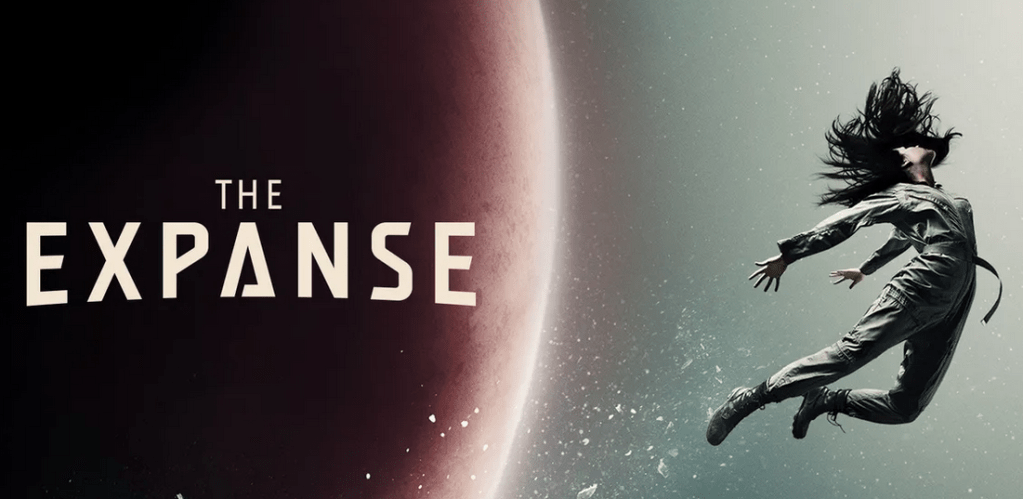
It was billed as the some of the best ‘hard science’ space opera spaciness in years, and Bezos actually looked like a good guy when the show was cancelled and he proclaimed Amazon Prime its saviour, picking up the series and finishing the story.
Yay for all of us. It’s a great watch. But—and there has to be a but, right, if there’s going to be a Substack—it got me thinking.
Now, before I can rabbit on about my little thoughts about this, I should tell you a bit about the show’s set-up. (It’s adapted from the book, but I haven’t read the book, so this is what I’ve got …)
The Expanse is basically a political intrigue story set in our solar system, where Earth, Mars and the Belters (workers from various rocks in the asteroid belt) come to loggerheads about power and independence and, finally, control over an alien technology called the ‘protomolecule’.
There’s lots of intrigue and big feelings, but what struck me almost immediately was this sequence describing Ceres Station, somewhere at the start of the first season. (Ceres Station is basically what Earth built to act as a port between it, Mars and the outer stations, and now the Belters sort of control it. I found this scene randomly on the web and its better than a screenshot …)
I looked at that scene and I laughed and I laughed and I laughed.
Because the unformed niggle that’s been bothering me about sci-fi for ages finally found shape in my head: it’s just fantasy.
Now, I’m not going to pretend I’ve read all sci-fi—the closest I came to sci-fi literature that accurately portrayed human nature was Red Mars and I could only stomach a few pages of that because it was so damn depressing—but I’ve watched a lot of sci-fi and, for the most part, I have to say that the more I see about what’s happening with us in the real world, the more absurd and silly a fantasy most sci-fi seems.
And it’s not fantasy because of the ‘hard science’ or the tech.
It’s fantasy because it’s totally delusional about humans. About our nature, about our bodies, about what is possible because of our nature and our bodies.

We are a strange species
When I saw that fantastic construction of the Ceres Station, I immediately imagined the kind of world with the kind of humans that would need to exist for that station to be built.
It would need the kind of humans who would welcome national and international cooperation and shared resources and intention—the sort of humanity-defining aligned purpose that would make Star Trek’s Federation look like a bunch of fevered, bickering children—just to build the small ship that would take us to the asteroid or moon with the kind of mineral supply we would need, and then to build the rig to mine those minerals and then to build the industrial capacity to process those minerals, so that we could build a station just big enough for fifty or a hundred people to manage the mine and the processing and the building so that we could build just a slightly bigger ship.
We would need immense resources just to get food and plumbing and water and air right—food and plumbing and water and air that will be capable of supporting those fifty or a hundred people to begin with.
Because even if we’re using machines, we’re doing it for us, right?
We would then need time for failures and mistakes and deaths—and all the while, we would need that saint-like, big-picture, globally-aware, human-centred international cooperation to keep holding the long-term vision, keep supplying the resources to keep that first little mining rig going without starting a war over who owns what and who has rights to the resources and who can claim those resources with force should the majority disagree with them.
Do you see where I’m going with this?
True, The Expanse is set about 300 years in the future and takes place after the invention of the Epstein Drive which allows rapid travel through the solar system, but what it—and most ‘hard science’ sci-fi dealing with Earth humans in space—doesn’t take into account, are the nitty gritties of human nature itself which remains unchanged over the course of our documented history and will likely remain unchanged despite the fact that humanity faces total collapse in about eighty years.
Currently, the people with the power to convene that sort of co-op to make use of a rapid travel device are finding ways not to prevent the actual demise of humanity but rather to hasten our end and behaving like tiny, mentally ill, hairless apes dropping bombs on other tiny, mentally ill, hairless apes so that their banana pile is bigger than everyone else’s.
At this moment in time, in the 21st century, the TWENTY-FIRST CENTURY, we can’t even agree that all human lives are equal; we’re still fighting over whose invisible sky fairy is the grandest and most real. We still have to convince an awfully lot of people that killing and raping other people, including children, is Not A Good Thing.
We still have to argue with a lot of people that yes the Earth is round and yes vaccines save lives and, yes, clean water and breathable air on this planet is actually worth quite a lot. The most actually.
And now we have to argue against the cartoon villains who want to control the world with their bots, guns and terrifyingly damaged egos. We’re entering a post-literate age for God’s sake. We’re literally going backwards as a species.
How the fuck, pray tell, are we ever, ever going to move into building anything that needs broad human and government cooperation for anything in space when we can’t even cooperate to save what we have here?
Even that very first step of mining for minerals off-world just to build the smallest spaceship of our dreams is pure and total fantasy, the wild imaginings of The Amazing Other Place that exists outside of any reality, like some kind of tech-bro heaven.
How can we keep taking seriously this ‘hard science’ sci-fi, how can we accept that it’s based ‘on reality’, how can we not see it as complete fantasy up there with dragons and elvish princes, when we don’t look at the data points of how humans actually behave in that ‘hard science’ set-up?
And then, of course, there’s the fantasy of what we are.
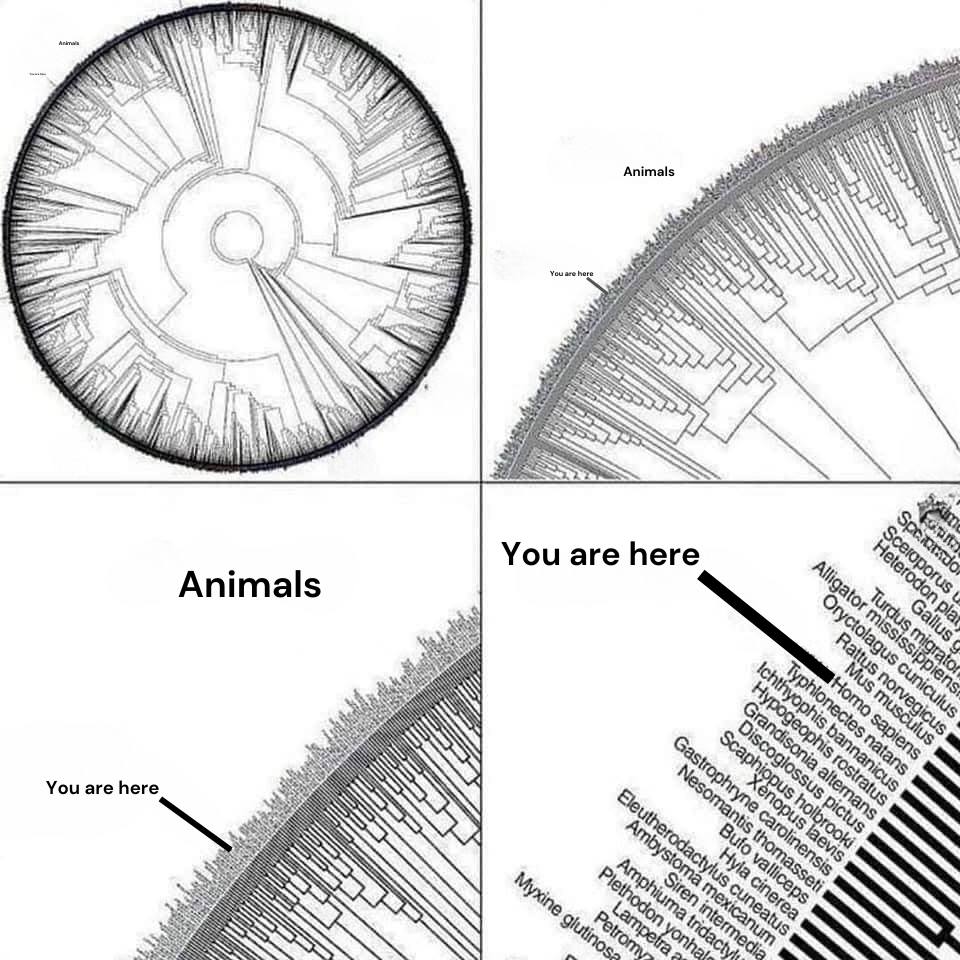
The little ape who thought it was smart
One environmentalist PR campaign that did more harm than good, I think, was the whole ‘Save the Planet’ message.
It continued the stance of humans as superior species to others—a message created by early philosophers, emboldened by the Abrahamic religions, and confirmed by the early anthropologists and zoologists—with the option to save something that needs saving from us.
It set us up as saviours to this other, separate thing called ‘the earth’. It became a choice, like ‘save the whales’ and ‘save the lesser spotted iguana of New Mexico’. Recycle. Save water.
Well, I don’t really have to, do I? Because recycling doesn’t make a difference and water comes in bottles, and species are going extinct all the time …
There is us and then there is nature. Shall I save it? Weeeeelll, I mean, it’s complicated …
But we are nature, of course. A selfish, intelligent, hopeful, neurotic, thinking, imagining, creative, cancerous part of it, but part of it nevertheless. It in total, in fact. We are nature. As is grass and a tree and a bee and a virus and an amoeba.
We are meat suits for the microbiome in and on our bodies, food for the trees when we die; like flowers and plants we have energetic fields that radiate and contract; we create energy in our brains and neurology just like every other living creature. We shit and piss. We need water and air and sun to live, just like most every other creature, animal or plant or fungi on the planet.
More, probably, since there are creatures and plants that live in caves and in the deep sea and don’t get teary and depressed because the warm sun hasn’t shone on their skin for a few days.
We die without clean water, our tummies get owie when we drink bad water. If we don’t have special medicine when we drink that bad water we poo and vomit ourselves to death.
We breathe bad air for too long and the cells in our system start corrupting and killing us from the inside out.
If we’re apart from greenery too long—the colour we have adapted to see in near-microscopic levels of difference—we feel unhappy.
We get sad if we aren’t comforted, if we’re alone, if we’re apart from people who love us and stroke our hair and tell us we are worth something to them.
We need to be told we have purpose and meaning because, if we don’t, our little hearts hurt and we either get sad and cry or break things or commit some of the most heinous crimes against humanity because we can’t manage the feelings in our heart.
And we think we can live in a spaceship or on a rock without the sun or air or fresh water? Without the living things around us to which our species is intricately connected?
Sperm can’t even find the damn egg in simulated gravity for crying out loud. The most basic function of biological life—to procreate—rendered utterly useless in the grand attempts to save humanity from … ourselves?
We are feeble, feeble creatures, our hearts and hope and ego extending way beyond not just our physical capabilities, but beyond our shared understanding of life.
And that really is the problem.
I love that we can imagine. I love that we can create. But we’ve elevated ourselves to that of a god, singular and alone; we’ve imagined ourselves into destruction that looks to the void of space for comfort.
And yet we can’t even conceive of a better world, let alone bring it into existence, for ourselves right here, right now, at the very precipice of our extinction?
I’m not dragging sci-fi, but I feel it does somewhat put ideas into little boy’s heads that make them think that the bundle of cells and neurons that comprise the human body can live apart from the mother that feeds it air, water, food from the soil, and tempered sunshine. We have an umbilical cord to Earth and we will suffer without it.
Suffer deeply, suffer broadly.
But hey, we’re addicted to suffering it seems, so maybe this is simply the obvious solution: instead of going to therapy and treasuring what we have here, we marvel at those little boys who try to convince us that making a new kind of hell for ourselves in space so that we may suffer alone, in the dark, fighting for air and water and food, is progress.
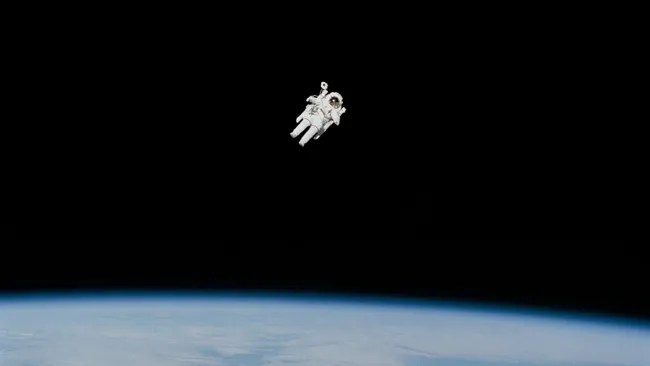
In the end, there is only the soil
No. I’m afraid I’ll never see ‘Earth humans off-world’ sci-fi as anything but a branch of fantasy now.
I like it and it’s fun. It has drama.
I mean, a series or book that entails watching humans duke it out politically for a thousand years just to settle on our closest available planet so that we can suffer for another thousand years is hardly riveting viewing or reading.
I think that’s what the creators of Star Trek really got right.
They didn’t overlook our shortcomings. In fact, our shortcomings are part of the lore.
The story goes that humanity is in ruins after a nuclear war and, using the tech developed from this war, Zefram Cochrane launches his first human-made warp-capable ship, the Phoenix, into space and because of that the Vulcans make contact with us and become our new dad, leading us into existing systems, tech and comfort.
In that lore, we didn’t really have to figure anything out ourselves. In that lore, we could only become humans of ethical fortitude because we’d nearly wiped ourselves out and someone came to save us.
So maybe this slow descent to self-obliteration will pay off one day.
We’ll nearly kill ourselves and nearly completely destroy our biosphere and with the weapons we create from nearly obliterating ourselves we’ll send out a little beacon that the aliens will approve of and they will come to us, another kind of sky fairy, to save us and help us live without the sun and the clean air and water and the fresh carrot pulled from the earth.
Or, you know, we could learn how to treasure what we have now. Treasure this perfect, perfect habitat, this literal miracle of time and luck. Learn to be better humans: cooperating, accepting, gracious, generative, considerate. Working as one species; not working against our own interests …
Oh I see it now. It’s all too easy and hopeful isn’t it?
Sigh.
We’re back to fantasy again.
 TANYA MEESON