I have something I want to tell you. Something I’ve been wanting to tell you for a while now. Something I think you should know …
I see you struggling, waiting around for ‘your story’ to find you—or you it, whichever comes first—and then being desperately unhappy that it’s not happening for you. And it makes me sad to watch this.
So I want to tell you that you can’t be waiting around like that. Even if there’s some momentum to your waiting. Even if you’re attending courses and writing workshops and you journal and you write endlessly about writing without writing anything at all.
I want to tell you to stop all this aimless waiting. I want to tell you a story isn’t a rare rough diamond you miraculously stumble upon, polish up and then claim as your own. Story isn’t inert like that. It’s not rare.
Story is active, generative, abundant; it’s dynamic, attracted to intention; it buds and grows and thrives through doing.
Most importantly, I want to tell you that story most often presents itself not as a whole, but as a part.
In the beginning was … a question?
The idea, the story seed, need be nothing more than a fragment from a dream that shakes you or perhaps an image that comes to your mind’s eye unbidden and only half-formed. Tolkien’s hole in the ground, for instance, or Fowles’ woman on the pier.
It could be a snippet of an overheard conversation that sparks a ‘what if’ line of thought for you or a news report that intrigues you. It could be a question you’ve asked of yourself that needs answering, a need you must fulfill in some way.
However the idea, the story seed, comes to you, it comes to you because you are open to it, because you are looking for it. Maybe not consciously and maybe not all day every day, but, on the whole, your intention is set to it; your consciousness is alert for signs of it, your senses are piqued for it. You are the eavesdropper, the curtain twitcher, the neighbourhood sleuth, when it comes to story.
In truth, storytellers are the investigative journalists of the dreamworld.
Because however the idea comes, however that story seed presents itself to you, the way to hold it and inspect it and see if it is something that will grow in the soil of your imagination is to ask questions of it.
Those astute storytellers, whose minds and hearts are always alert and curious, will catch the slightest scent on the breeze of something that makes their story senses prickle and will ask of the scent, ‘Where is your source? Lead me to it.’
They will ask of that dream fragment, ‘What are you in the material world?’ They will ask of the sudden flash of a world in their mind’s eye, ‘What is the space in which you exist?’ Of the story seed that has appeared to them as a character, the storyteller will ask, ‘Who are you? What are you doing here? What do you need to say? Where do you come from? What are you feeling and why are you feeling it? How did you come to be here? Where do you want to go?’
They will ask of the seed: ‘What do you want to become?’
If you persist with your questions—gently, with curiosity—the answers will arrive, because they can’t not, and with each answer another question will arise and thus another answer, until the shape of the story is laid before you like a neural network of a body ready to move. A world ready to be born.
But if you’re not active in the seeking and seeing of the stories around you, if you’re not always asking questions of the story seeds that come your way, what will you have? Nothing. All you will always see is an empty, difficult landscape. All you will think of the idea that flashes before you is ‘it is not whole’.
If you always let an interesting half-formed idea slip away because you couldn’t respect it as a start or hook it with a question—and then keep asking questions—what do you have? A writer with no story to tell.
This happens more often than you think, this ‘writers who can’t tell stories’. The opposite is also true: people who can’t write with a million stories to tell.
Both scenarios have their troubles, but I tend to think the latter is less complex to deal with than the former.
If you see stories everywhere, you can learn how to write quite easily if you’re willing to practice and make mistakes.
Maybe you turn out to be a great writer and do your stories justice, maybe you’re a mediocre writer or a bad writer and the story dies on contact with the real world. Doesn’t matter. You did your job. Have story, will write it down. That’s your only requirement as a storyteller who writes.
Move on to the next one and keep going.
But the former? The writer who can write but has no stories to tell and who desperately wants to tell a story? Who wants to lose themselves in a fiction, but can’t? Now that’s a sad state of affairs. Because that’s a lot more difficult to fix. Because it’s a perception problem and, very often, an ego problem.
Through the looking glass
In my work as a developmental editor and author coach, even as a workshop facilitator, even as a writer watching other writers, it’s quite something seeing or listening to a writer get in their own way when it comes to story.
There are multiple ways this happens.
The first is, they don’t realise that they have to make themselves receptive; that their intention must be for story. Very often they’ve been too wrapped up about writing well that they forget there must be something to write about.
(And just to be clear these are different skills, writing and storytelling. You can be a brilliant writer at a line level without being a good storyteller. Great storytellers however are almost always at least okay writers. Dan Brown can spin a yarn, right? But he’s unlikely to win any literary prizes.)
The writer without a story is almost always unaware that their spidey senses must always be on, always asking, always listening for a story. Always receptive to it.
Tied to this, I think, is the second problem: they (very often) still believe the story must be crystal clear and fully formed when it comes to them, like they’re some kind of Mozart; that they will pluck that high-concept diamond idea from their own brains, inspect it as a whole and congruent element, and then simply polish it into two-dimensional form, sentence after sentence.
If they can’t see the whole shebang right away, it’s not anything worth considering. Almost as if, if they can’t fall in love immediately they don’t see the point in going on a first date.
So they ignore the hundreds of unformed story seeds that drift past them each day. And because they’re expecting to stumble on this perfect, fully formed story, they don’t know what do with a story seed when it accidentally hits them in their feels. They don’t know how to ask questions of it or even that they need to ask questions of it.
They don’t know that, when that small idea seed comes to them, they’re only at the very start of story creation, that the holding and unfolding and planting and tending of story creation all happens through the strange alchemising magic of whispered questions … and then listening for the answers.
Maybe they don’t know this because their curious minds have become blunted by ego—‘How can such a small seed become A Novel of Great Importance?’—and I think this brings us to the third problem:
They think that whatever novel they write must be A Novel of Great Importance.
Very often, these are writers who are incredibly well-read and well-educated in the matter of Literature with a capital L. They’ve maybe completed an incredibly expensive and impressive MFA. Maybe they excelled, or worse, they did well, but they weren’t that year’s Star Student and this means, in their minds, that they have nothing worthwhile to say. They’ve probably been taught that story and plot are not of literary importance. They’re so stuck on what they think they should be writing or how they should be writing that they don’t write—or finish—anything at all.
And this problem of should is not limited to those who’ve manacled themselves to A Novel of Great Importance. This is true of any writer of any literary pedigree who gets stuck because of what they think they should write.
There are writers who think they should be fiction writers when they’re actually poets or fiction writers who’ve been told only academic writing is worthy, or narrative non-fiction writers who’ve been led to believe that writing for the layperson is lame; writers who started off with a label they marketed themselves around and got published for and now have nothing more to say on the topic but can’t break free of their own and others’ expectations.
I think this problem of shoulds might be particularly prescient for the writer who has fallen for the con of the instagrammable ‘writer life’. They get trapped by how they think writing should look and how their story should present itself to content scrollers or how they should present themselves to content scrollers as Authors.
But there is no ‘writer life’. There is no such thing. It’s a scam, a con, a lie, a fakery, all in service to an ideal that never existed to project an image that is more of a story than the story the writer is writing. All so that a content scroller who might be a reader believes in the worth of the writer and story enough that they buy an actual book.
If the sensitive writer is vulnerable to this, the unconscious comparison can stunt them, hurt them, pull their focus.
Remember always: there is only you and the story and the writing; there is only you and the work of being a creator.
In fifty years time none of this will matter. Instagram won’t matter, social media as we understand it today won’t matter; Substack won’t matter, this post won’t matter; who liked your work, who didn’t, which books sold, which didn’t, who gave you praise, who didn’t … none of it will matter.
The only thing that will matter is how you engaged with your creative, god-like magic in the time you were given on earth. It’s cumulative, it’s a process of becoming as human as you can become—and hopefully the best version of being human that is possible. This and the relationships you create, the love you share, is literally all that matters. There is no other meaning to life.
In my opinion, of course.
So open your eyes dear Writer With No Story, open your ears. Get out of your own way. A million million story seeds float past you every day
When one brightens for you, ask of it a question—why are you here, what are you about, are you for me (because some of them won’t be)—and when the answers come, ask more questions until you’re compelled to write the answers down and then keep asking more questions, like a child sitting at the knee of a beloved grandparent reading them a story … And then what happened? And then? What happened after that? Turn the page!
And like a child you must trust. And be curious.
Some stories won’t work out, no matter how brave you are. That’s okay. Move on. Save it for another day or let it go.
And if you can’t see or feel the story seeds, ask to see them and feel them. Consider it a prayer to your muse, and act of tilling the soil that has lain fallow for so long.
As for me? My next story is waiting. There is a house. There is a stranger. I think it’s a love story. I’m not sure how long it will be.
But I’m excited to find out. I have so many questions …
Take care,
t
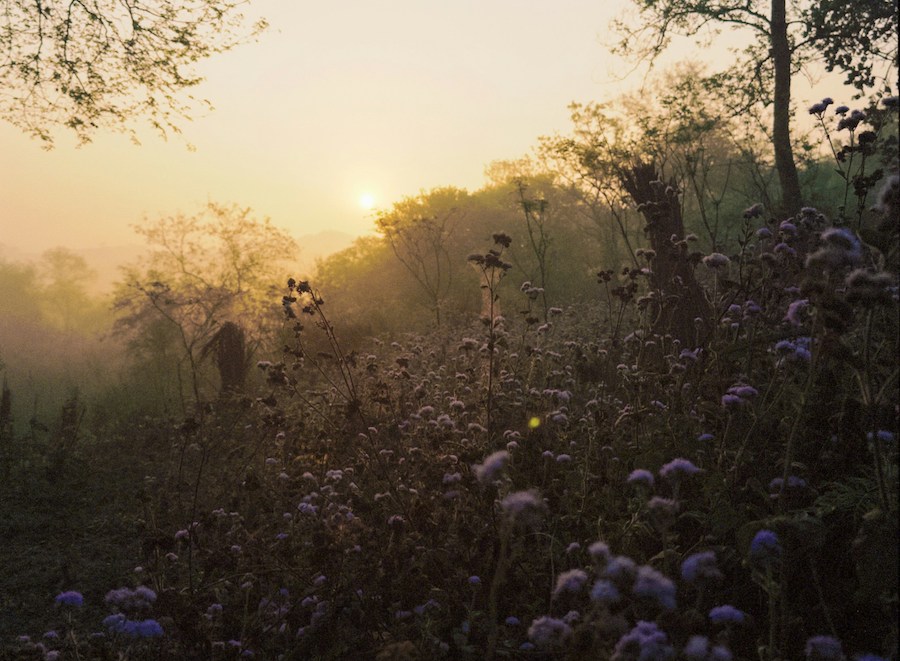
Photo by Ishaan Sen on Unsplash
 TANYA MEESON